

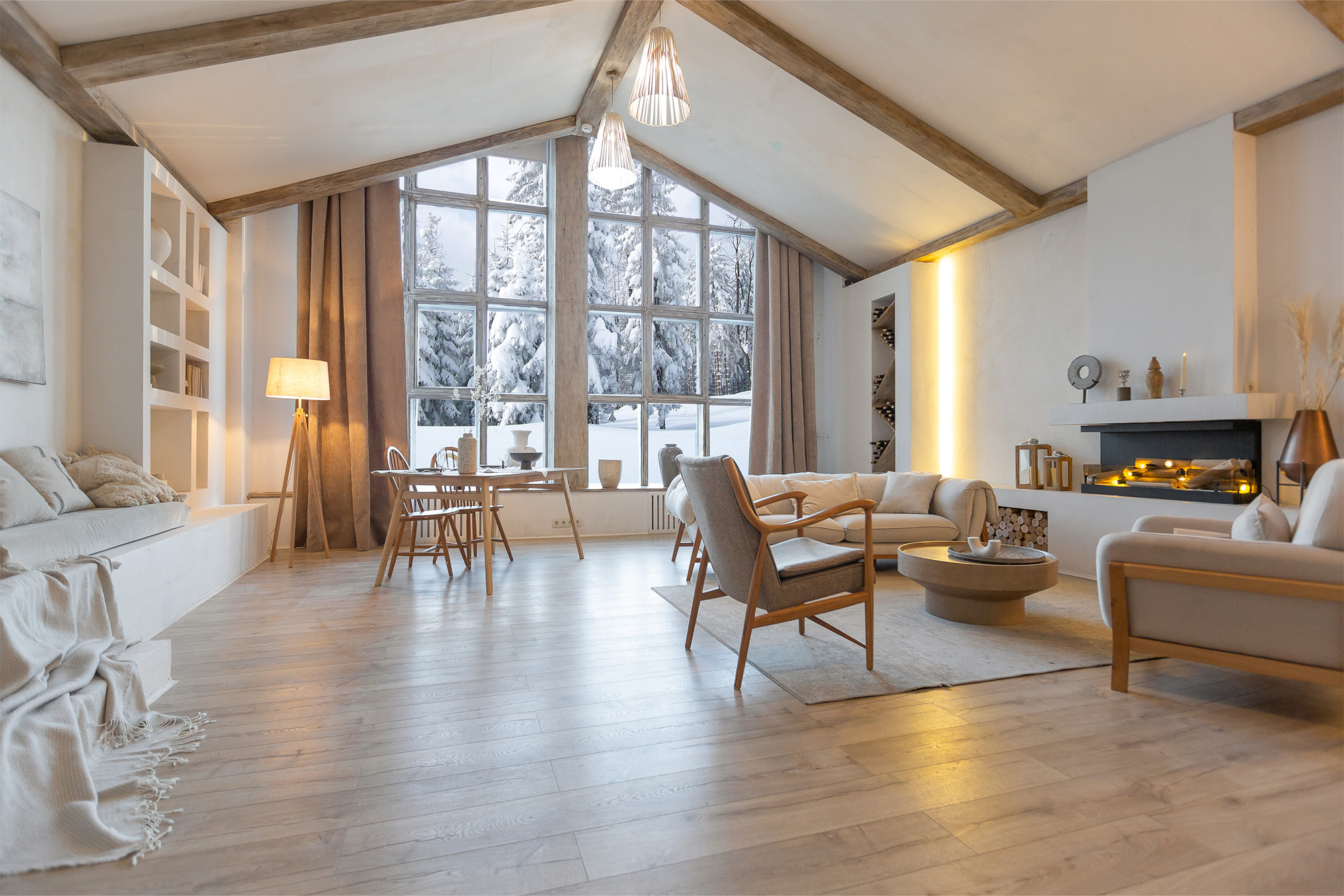
Cold winter weather across the Ohio River Valley brings freezing temperatures, biting winds, and heavy snowfall outside, but it also creates dramatic shifts inside your home. When you turn on your central furnace or heat pump to stay warm, the indoor atmosphere changes rapidly. For main-level living spaces, these sudden environmental shifts put hard-surface flooring to the test.
If you have installed laminate or luxury vinyl plank (LVP) across your primary living areas, hallways, or kitchens, you may wonder how the drop in temperature and humidity affects your floors. Whether you live in a classic historic home in Cincinnati, an open-concept layout in Mason, an established property in Montgomery, or a modern build in Loveland, OH, understanding how seasonal weather impacts your main-level surfaces helps you protect your investment year after year.
At Bush Flooring Center, we have guided local shoppers through every seasonal shift for nearly four decades. Here is what happens to your main-level laminate and vinyl floors during a harsh Ohio winter, along with practical steps you can take to keep them performing at their best.
During a standard Cincinnati winter, outdoor temperatures regularly plunge below freezing. Cold air naturally holds far less moisture than warm summer air. Once that outdoor air enters your home and runs through your heating system, your indoor relative humidity levels can drop from a comfortable 50 percent down to 20 percent or lower.
This extreme drop in relative humidity is the single largest factor affecting hard surfaces on your first floor. Because your main level sits directly above basements, crawlspaces, or concrete slabs, it experiences cooler subfloor temperatures from below while facing dry, heated air from above. This temperature gradient creates unique physical stresses across floating floor systems.
How Freezing Winters Affect Main-Level Laminate Flooring
Laminate flooring features a dense core made from compressed wood fibers, known as high-density fiberboard (HDF). Because it is a wood-based product, laminate naturally absorbs and releases moisture as environmental conditions change throughout the year.
Gapping and Seam Separation
When dry winter air pulls moisture out of the fiberboard core, your laminate planks shrink slightly. Because laminate is installed as a floating floor where planks lock together without glue or nails, this shrinkage can cause small gaps to open up between plank seams. You might notice tiny separations that were not visible during the humid summer months. As long as your floor was installed with proper perimeter expansion space, these seams usually close back up naturally when indoor humidity returns in the spring.
Increased Squeaks and Creaks
Cold subfloors and contracting planks can lead to slight movement when you walk across your main level. When the tongue-and-groove locking systems contract, you might hear faint clicking or creaking sounds beneath your feet. In homes throughout Montgomery and Loveland, OH, where forced-air furnaces run continuously during January and February, this temporary noise is very common and typically subsides once humidity levels normalize.
Edge Swelling from Melted Snow and Slush
While dry air shrinks the core, winter boots present the opposite problem at your front door. Laminate surfaces resist surface scratches well, but sitting puddles of melted snow, road salt, and slush can seep into perimeter joints. If standing water penetrates between plank edges, the underlying wood core can swell and peak, causing permanent edge damage that requires plank replacement.
How Cold Weather Impacts Main-Level Luxury Vinyl Plank (LVP)
Luxury vinyl flooring handles winter conditions differently than laminate because it is composed of synthetic materials rather than wood fibers. However, vinyl is still sensitive to temperature fluctuations across your main floor.
Thermal Contraction Instead of Moisture Loss
Vinyl planks do not lose moisture to dry furnace air the way wood products do. Instead, vinyl reacts directly to temperature drops through thermal contraction. If your main level sits over an unheated crawlspace or a chilly basement, the cold radiating upward can cause standard flexible vinyl planks to contract. If the room drops to unusually low temperatures, locking tabs can experience added tension, which makes planks stiffer and slightly more brittle under heavy impact.
Superior Resistance to Winter Slush and Puddles
Where luxury vinyl truly shines during an Ohio winter is moisture resistance. If your active household frequently tracks in snow, mud, and slush, 100 percent waterproof vinyl (including rigid core SPC and WPC options) prevents water from damaging the floor. Even when melted winter slush pools near your entry, the waterproof core will not swell, buckle, or rot. This quality makes luxury vinyl a favorite option for busy entryways, kitchens, and mudrooms across Cincinnati and Mason.
Comparing Laminate and Luxury Vinyl in Winter Conditions
Understanding how these two materials compare under winter conditions helps you choose the right flooring for specific areas of your main floor:
Moisture Resistance: Luxury vinyl provides total protection against melted snow and slush, whereas laminate cores can swell if standing puddles seep between plank joints.
Dimensional Stability: Rigid core luxury vinyl planks resist humidity-related shrinkage better than laminate, though both products expand and contract slightly with seasonal temperature changes.
Warmth Underfoot: Both options feel cooler than carpet during winter, but pairing either surface with a premium insulating underlayment helps block cold air rising from your basement or crawlspace.
Smart Ways to Protect Your Floors This Winter
You do not have to accept seasonal floor damage as an inevitable part of living in the Tri-State area. With a few proactive maintenance habits, you can keep both laminate and vinyl looking beautiful throughout the coldest months:
Maintain Indoor Humidity: Keep your home relative humidity between 35 percent and 50 percent by running a whole-home humidifier or placing console humidifiers in large living areas. This prevents laminate cores from shrinking excessively.
Place Heavy-Duty Walk-Off Mats: Position moisture-trapping mats both outside and inside every exterior door. Mats capture grit, road salt, and slush before they reach your main living areas.
Remove Snow and Slush Promptly: Keep a microfiber mop or soft towel near your front entry to wipe up melting puddles before moisture finds its way beneath baseboards or into laminate seams.
Sweep Away Road Salt Frequently: Road salt and de-icing chemicals tracked in from driveways act like sandpaper under foot traffic. Sweep or vacuum with a hard-floor attachment regularly to protect your floor wear layer.
Maintain Steady Indoor Temperatures: Avoid turning your thermostat down drastically when leaving for the day. Keeping your home at a steady, moderate temperature minimizes thermal shock to floating vinyl floors.
Why Quality Underlayment and Expert Installation Matter
The best defense against cold winter floors starts on installation day. A proper moisture barrier and quality insulating underlayment dampen sound, add thermal protection over cold subfloors, and ensure floating planks expand and contract smoothly without buckling against walls or doorframes.
Our in-house installation team brings decades of local experience to every project, ensuring your subfloor is properly leveled and seasonal expansion gaps are measured with precision.
Get Reliable Flooring Advice for Your Ohio Home
Whether you are updating an entryway, finishing a basement, or replacing the floors across your entire main level, choosing the right material makes all the difference when freezing temperatures arrive.
Ready to find the best flooring for your style and budget? Stop by our showroom and discount outlet warehouse in Cincinnati, book a Shop at Home visit, or give our team a call to schedule your in-home estimate. At Bush Flooring Center, we are always on your side to help you love your floors in Cincinnati, Montgomery, Mason, and Loveland, OH.


