

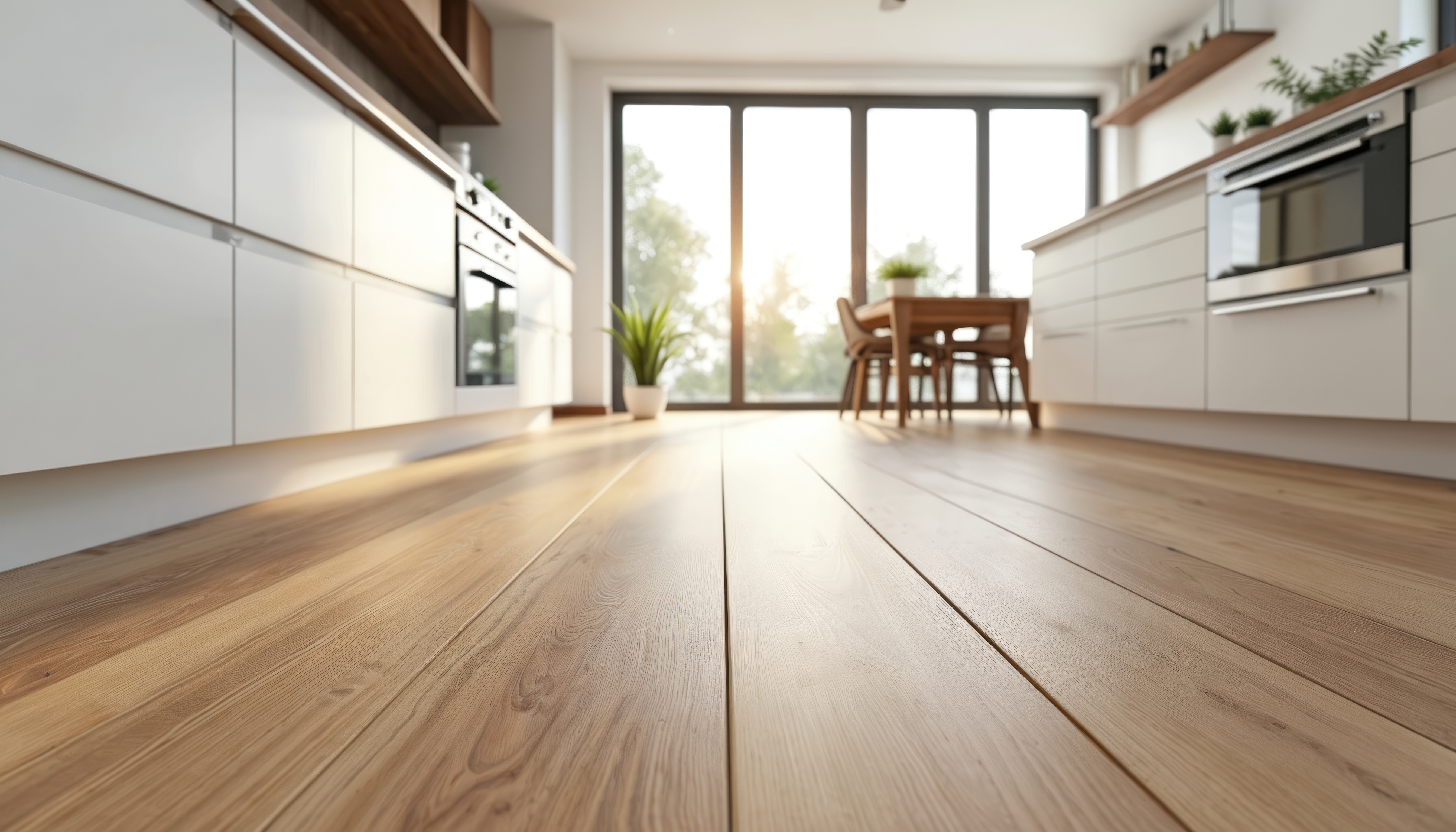
Living in the Greater Cincinnati Tri-State area means dealing with wild weather swings. Our winters are freezing and dry, while our summers turn thick and muggy enough that you can practically feel the moisture in the air. You might not think about your indoor humidity levels when picking out a new floor, but your home's air quality directly dictates how your flooring behaves over time. Planks expand and contract constantly as the seasons shift. If you ignore the local weather when shopping, your new floor can quickly buckle or develop ugly gaps.
Choosing the right material for your home means taking a realistic look at how different options respond to local moisture. Whether you live in a historic home in Montgomery or a new build in Mason, you need to know what happens to your floors when the summer humidity spikes.
How Wood Floors Handle Changing Seasons
Solid hardwood is beautiful, but it behaves like a sponge. It absorbs moisture from damp summer air and swells, then releases that moisture into dry winter air and shrinks. This constant movement is completely normal, but it causes visible changes in your floor throughout the year:
Summer Cupping: When the humidity spikes in July and August, the bottom of the wood board absorbs moisture from the subfloor faster than the top can dry out. The edges of the planks lift slightly, creating a wavy, cupped appearance across the room.
Winter Gapping: When you turn your furnace on in the winter, the air dries out completely. The wood planks shrink, leaving noticeable gaps between the boards.
If you love the look of real wood but do not want to deal with severe gapping, engineered hardwood is a much safer bet for our local climate. Engineered wood is built with a cross-grained plywood core beneath a real hardwood top layer. Because the layers run in alternating directions, they lock each other in place. This construction restricts the wood from expanding and contracting, giving you incredible stability even during the muggiest Cincinnati summers.
The Stable Options: How Vinyl and Laminate Handle Moisture
If you want a floor that completely ignores changing humidity levels, luxury vinyl plank or premium laminate are excellent choices for active homes. Because these materials are made from stone-plastic composites, pure PVC, or highly compressed resins, they do not absorb moisture from the air. Your indoor air can feel like a sauna, but these planks stay perfectly flat.
But you still have to plan carefully for seasonal shifts in Loveland and surrounding areas. These floors are installed as floating systems, meaning they click together without glue or nails. Even though the vinyl itself does not grow, the drywall, baseboards, and subfloor around it do move.
Our installation crews always leave an exact expansion gap—usually about a quarter of an inch—hidden beneath your baseboards along the perimeter of the room. If you jam the planks tight against the drywall during a dry winter installation, the floor will have nowhere to go when the house settles in the summer. The planks will push against the walls and lift off the ground, causing the center of the floor to bubble up.
Managing Your Home's Climate to Protect Your Floor
No matter what material you choose, keeping your home’s humidity between thirty and fifty percent year-round is the best way to protect your floor. Running your air conditioning or a whole-house dehumidifier in the summer keeps the air stable. In the winter, adding a humidifier to your heating system prevents solid wood from shrinking too drastically. Keeping your indoor climate consistent ensures your floors stay tight, quiet, and beautiful for decades.
Get Expert Advice for Your Cincinnati Home
You do not have to guess which material will hold up best to our local climate. Finding the perfect balance between beautiful style and real-world durability comes down to matching the right flooring type to your specific neighborhood and home structure.
We have spent decades helping families across the Tri-State area navigate these choices with complete honesty and transparency. We have what we would argue is the BEST installation staff in town, and we make sure every job is prepped and acclimated correctly before a single plank goes down. Visit our Cincinnati showroom to see our materials in person, test the stability of our engineered cores, and contact us to talk with a local expert about preparing your home for the changing seasons.


